EXTRACTIONS
Everything you need to know about your extraction appointment at Arora Dental
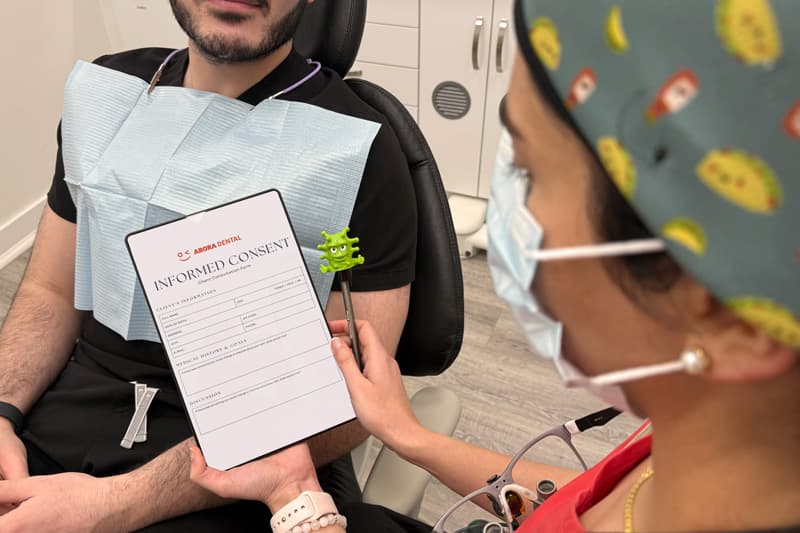
Everything you need to know about your extraction appointment at Arora Dental
What is a tooth extraction?
- ✓
A tooth extraction is the removal of a tooth from its socket in the jawbone. This procedure is performed when a tooth is too damaged or decayed to be restored or when its removal is necessary for oral health.
- ✓
Extractions are typically recommended for teeth that are severely decayed, fractured, or damaged beyond repair. Other indications include impacted teeth, preparation for orthodontic treatment or dentures, and advanced periodontal disease.
Pre-operative instructions
Discuss your medical history and medications, especially blood thinners, with the dentist. Extractions require local anesthesia, so eat before your visit to prevent light-headedness.
During your appointment
The dentist begins by administering local anesthesia to ensure your comfort. Using specialized instruments, the tooth is gently loosened and removed from the socket. Stitches may be placed to promote healing if necessary.
Post-operative instructions
After extraction, bite down on gauze to control bleeding. Avoid smoking, vaping, or using a straw for 24 hours. Eat soft foods, avoid hot/spicy foods, and take pain relievers as directed.
After your visit
Swelling and minor discomfort are normal and should subside within a few days. Full healing of the extraction site may take several weeks. If excessive pain, swelling, or bleeding occurs, contact the office immediately.
Dental Insurance Accepted






Don't See Your Insurance? We Accept Most Major Plans and the CDCP.
Learn more about the CDCP and how it can help you.
Learn More
What Our Patients Say

Over 1160 5-star reviews
Frequently Asked Questions
At Arora Dental, we only recommend extractions when it's the best option for your long-term oral health. That might be because the tooth is too damaged to repair, infected, or causing crowding. If you need one, we'll walk you through everything. No pressure, just clear info and a supportive team.
During the extraction, you won't feel pain because we use local anesthesia to numb the area completely. You may feel some pressure during the procedure, but no pain. After the extraction, you may experience some discomfort as the anesthesia wears off, but we'll provide pain management instructions and medications to keep you comfortable during recovery.
Yes, we accept most major dental insurance plans, and extractions are typically covered as a basic or major procedure depending on the type of extraction. Coverage usually ranges from 50-80% after your deductible. We're in-network with most major insurance providers and can help you understand your coverage before treatment. Contact us to verify your insurance benefits.